

Video production vendor partnerships are defined as formal, ongoing relationships between brands and specialized production companies that align creative output with measurable marketing goals. The strongest partnerships in this space go far beyond transactional project work. They weave together shared financial structures, AI-powered workflows, and creative alignment to produce content that performs consistently across every channel. For marketing professionals and brand executives, the difference between a vendor and a true production partner is the difference between one good video and a content engine that compounds returns over time.
What are the key criteria for selecting the right video production vendor partner?
Selecting the right video production vendor partner starts with one non-negotiable: the vendor must understand your marketing objectives before they touch a camera. Creative capability matters, but a production company that cannot connect its work to conversion rates, audience targeting, or platform-specific performance is a liability, not an asset. Finding the right production company requires evaluating creative, operational, and distribution functions together, not in isolation.
When vetting potential video collaboration partners, evaluate these criteria systematically:
- Brand and marketing alignment: Does the vendor ask about your KPIs, customer personas, and distribution channels before proposing a creative direction?
- Technical and creative range: Can they produce DRTV infomercials, social reels, CTV ads, and Amazon product videos, or are they limited to one format?
- AI and technology adoption: Do they use AI-assisted editing, metadata automation, or performance analytics in their standard workflow?
- Communication and process: Do they offer structured feedback loops, milestone reporting, and dedicated account management?
- Portfolio evidence: Have they produced work for brands in your category with documented performance results?
| Criteria | What to Look For |
|---|---|
| Marketing alignment | Vendor asks about KPIs and audience before creative brief |
| Creative range | Multi-format capability across social, e-commerce, and broadcast |
| AI integration | Automated metadata, B-roll generation, performance analytics |
| Communication | Structured milestones, regular reporting, responsive account team |
| Proven results | Case studies with measurable outcomes, not just aesthetic reels |
Pro Tip: Ask every prospective vendor to walk you through a past project's performance data, not just the creative output. A vendor who cannot speak to results is not yet a true marketing partner.
How do long-term strategic partnerships enhance video production outcomes?
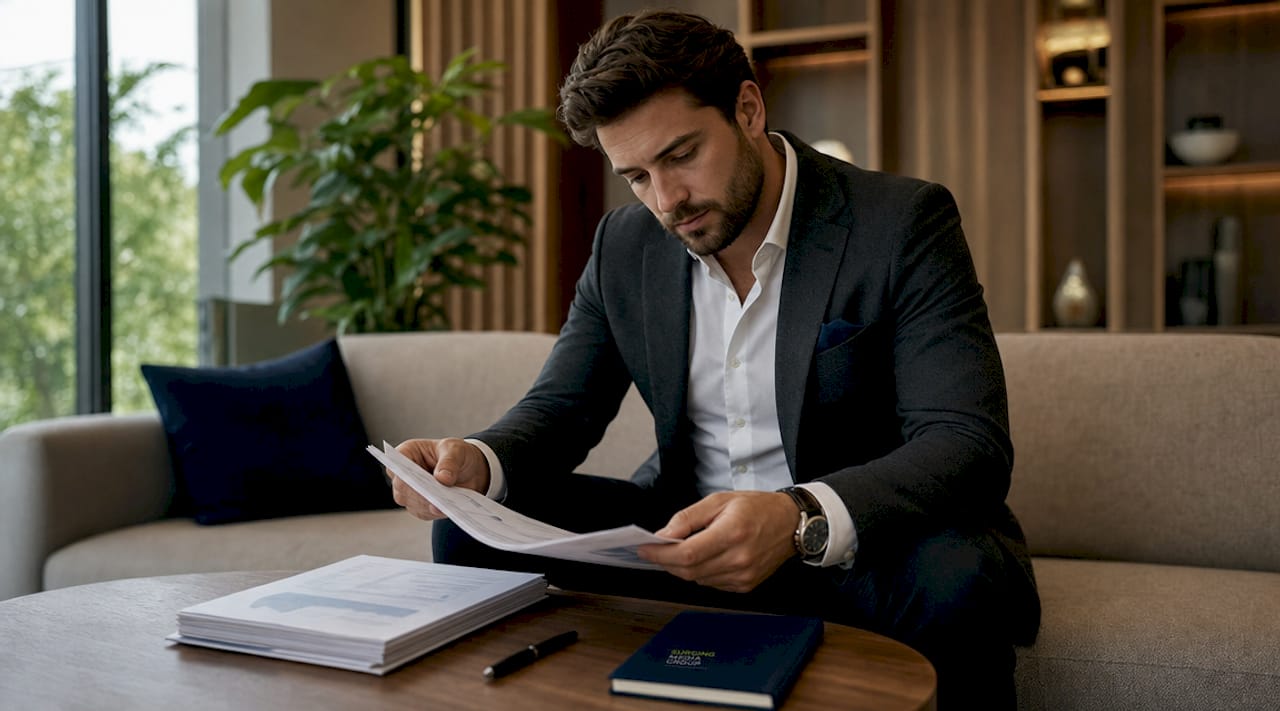
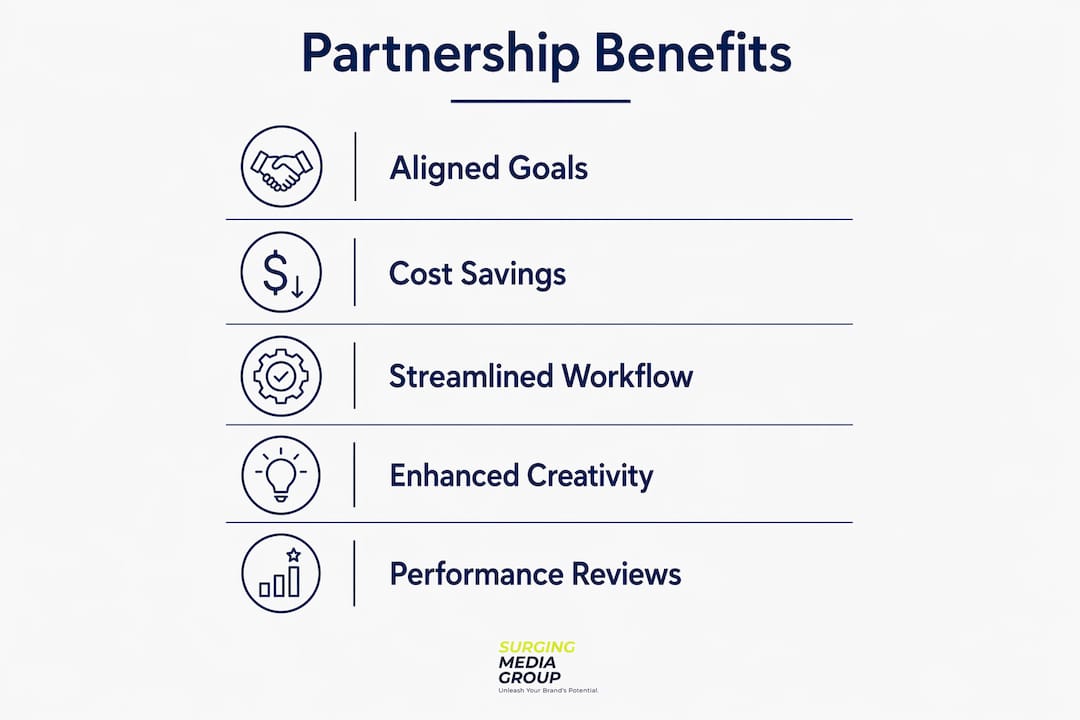
Long-term strategic partnerships in video production deliver something no single project contract can: compounding value. When a vendor learns your brand voice, audience psychology, and production preferences over multiple engagements, the output quality rises while the cost per asset falls. Bundled services and negotiated rates become available in ongoing relationships, reducing onboarding friction and improving workflow efficiency with every new production cycle.
The most sophisticated brands now structure these relationships through multi-year agreements and first-look deals, mirroring structures used at the highest levels of film production. See-Saw Films secured a $50 million multi-year financing deal with Entourage Ventures to support a global slate of features, reducing dependence on traditional pre-sales and creating predictable production capacity. That same logic applies to brand video programs: a committed financial structure creates a stable content pipeline instead of a scramble for budget approval before every campaign.
Sony Pictures and Macro's multiyear co-financing arrangement demonstrates another dimension of this model. By sharing financial risk and creative control through an exclusive first-look deal, both parties gain competitive advantages that neither could achieve independently. For brand executives, a co-investment model with a production partner can unlock higher production value at shared cost, particularly for flagship campaigns or product launches.
The operational benefits of long-term film production partnerships include:
- Negotiated day rates and package pricing that improve with contract length
- Reduced creative briefing time as the vendor internalizes brand standards
- Priority scheduling and resource allocation during peak campaign periods
- Shared investment in custom assets, templates, and brand-specific production tools
"The most effective video partnerships are not vendor relationships. They are co-authorship arrangements where both parties have skin in the creative and commercial outcome."
Pro Tip: When negotiating a multi-year production agreement, include a performance review clause at the 12-month mark. This protects both parties and creates a structured moment to realign on goals, pricing, and creative direction.
What role does AI play in modern video production vendor partnerships?
AI is no longer a future consideration in video production vendor partnerships. It is the present standard for any vendor operating at scale. The Avid and Google Cloud partnership embeds agentic AI directly into editing tools to automate metadata enhancement and B-roll generation, cutting post-production time significantly. This kind of AI-enhanced editing ecosystem transforms traditional workflows by removing the most labor-intensive manual steps from the production pipeline.
For marketing teams, the implications are direct. AI automations reduce video content production bottlenecks and increase ad account performance by accelerating the speed from brief to deliverable. A vendor who still relies entirely on manual editing, manual tagging, and manual asset organization will always be slower and more expensive than one who has integrated AI at the workflow level.
The Overcast and TwelveLabs partnership takes AI integration a step further, delivering end-to-end video intelligence that treats video as structured, searchable data rather than flat files. This means a brand's entire video library becomes queryable, enabling marketing teams to repurpose existing assets, identify content gaps, and extract performance insights without manual review. Video partnerships are evolving from managing content as static assets to orchestrating intelligent, data-driven content flows.
| Workflow Element | Traditional Approach | AI-Assisted Approach |
|---|---|---|
| Metadata tagging | Manual, post-production | Automated during editing |
| B-roll selection | Editor judgment, time-intensive | AI-generated suggestions from brief |
| Asset searchability | File name and folder structure | Semantic search across full library |
| Performance analysis | Manual reporting cycles | Real-time analytics integration |
| Content repurposing | New edit per format | Automated format adaptation |
Pro Tip: When evaluating audiovisual vendor cooperation, ask specifically which AI tools are embedded in their editing and post-production workflow. Vendors who can name specific platforms, such as Avid, TwelveLabs, or Google Cloud AI, are operating at a different level than those offering vague references to "AI-enhanced production." You can also explore resources on training teams on AI marketing tools to prepare your internal team for AI-integrated vendor workflows.
How to establish effective collaboration and communication frameworks with video production vendors
The most common reason video production partnerships underperform is not creative misalignment. It is process failure. Unclear briefs, inconsistent feedback, and undefined approval chains create delays that erode both budget and trust. Establishing a communication framework before production begins is the single most effective way to protect the quality and timeline of your content program.
Here is a practical framework for building productive media vendor relationships from day one:
- Define deliverables and timelines in writing before any creative work begins. Specify formats, aspect ratios, platform destinations, and revision rounds in the initial agreement.
- Assign a single point of contact on both sides. Fragmented communication across multiple stakeholders is the fastest way to dilute creative direction and miss deadlines.
- Schedule structured check-ins at pre-production, mid-production, and post-production milestones. Ad hoc feedback creates confusion; scheduled reviews create accountability.
- Use a shared project management platform. Tools like Frame.io, Asana, or Notion give both parties visibility into status, assets, and feedback without relying on email chains.
- Align on brand messaging and creative vision in a dedicated kickoff session. This session should include your brand guidelines, tone of voice documentation, and examples of content that has performed well.
Neat's approach to vendor partnerships emphasizes working with regional units while maintaining a unified global standard. That principle translates directly to brand video programs: your vendor must be able to execute locally while honoring the global brand architecture. Alignment of global strategy with local execution is the defining challenge of enterprise-scale video production partnerships.
The most common pitfalls to avoid include approving scripts verbally without written sign-off, providing contradictory feedback from multiple internal stakeholders, and changing creative direction after production has begun. Each of these adds cost and time that compounds across a multi-video program.
Pro Tip: Build a "creative bible" document for your vendor at the start of every new partnership. Include your brand's visual identity, messaging hierarchy, audience personas, and three to five examples of video content that reflects your ideal tone. This single document eliminates more revision cycles than any other process investment.
How do video production vendor partnerships support integrated marketing strategies?
The most productive video service alliances extend well beyond production. They connect content creation directly to distribution strategy, platform optimization, and performance measurement. A vendor who understands how your video will be used on Amazon, in a CTV campaign, and across Instagram Reels will make different creative decisions than one focused solely on the shoot itself.
CJ ENM, TBS, and U-Next's joint venture Studio Monowa integrates planning, production, and distribution across Korean and Japanese markets in a single partnership structure. The trinity model at work here, combining production capability, creative IP, and platform reach, is the same model that brand executives should demand from their video marketing partnerships. Content that is produced without a distribution plan is content that underperforms regardless of its quality.
For marketing teams managing multi-channel programs, the right production partner enables:
- Scalable content repurposing across social media, e-commerce product pages, CTV, and email without full re-shoots
- Format-specific optimization where the vendor adapts pacing, aspect ratio, and call-to-action placement for each platform
- Audience-aligned storytelling where creative decisions are informed by performance data from previous campaigns
- Integrated analytics that connect video engagement metrics to downstream conversion and revenue outcomes
Explore video repurposing strategies for e-commerce to understand how partnership models can extend the life and reach of every asset your vendor produces. The brands that extract the most value from their production investments are those who treat each video as a modular asset, not a finished product.
Key takeaways
Effective video production vendor partnerships require AI integration, long-term financial structures, and communication frameworks that connect creative output directly to measurable marketing performance.
| Point | Details |
|---|---|
| Vet vendors on marketing alignment | Require vendors to demonstrate knowledge of your KPIs and distribution channels before creative work begins. |
| Pursue multi-year agreements | Long-term deals unlock negotiated rates, priority scheduling, and compounding creative quality over time. |
| Demand AI-integrated workflows | Vendors using tools like Avid, TwelveLabs, or Google Cloud AI deliver faster, more cost-effective production at scale. |
| Build communication frameworks | Assign single points of contact, use shared project platforms, and schedule milestone reviews to prevent process failure. |
| Connect production to distribution | The strongest partnerships align creative decisions with platform-specific performance data and multi-channel distribution plans. |
What I've learned about vendor partnerships after years in production
Here is the uncomfortable truth I have observed after years working at the intersection of video production and performance marketing: most brands treat their production vendors like printers. They hand over a brief, wait for output, and measure success by whether the video looks good. That approach leaves an enormous amount of value on the table.
The partnerships that have produced the most dramatic results, for brands like Copper Compression and Black & Decker, share one quality. The vendor is brought into the strategy conversation before the creative brief is written. When a production partner understands the audience psychology, the competitive context, and the specific platform where the video will run, the creative decisions they make are fundamentally different. The script structure changes. The pacing changes. The call-to-action placement changes. These are not aesthetic choices. They are performance choices.
I have also watched the AI conversation shift from theoretical to operational in the past 18 months. Vendors who have embedded AI into their editing and metadata workflows are not just faster. They are producing content that is more discoverable, more repurposable, and more measurable. For marketing executives managing large content programs, the gap between AI-integrated vendors and traditional production houses is widening every quarter.
My honest advice: stop evaluating vendors on their reel alone. Evaluate them on their process, their technology stack, and their willingness to be accountable to your performance metrics. The best creative agency collaborations are built on shared accountability, not just shared aesthetics.
— Sergio
How Surgingmedia approaches video production partnerships for marketers
Surgingmedia builds video production vendor partnerships the way the best brands build their content programs: with performance at the center of every creative decision.
Surgingmedia's end-to-end production model covers concept development, scripting, shooting, post-production, and distribution analytics, giving marketing teams a single partner accountable for the full content lifecycle. With AI-enhanced workflows, experience across DRTV, Amazon, CTV, and social platforms, and a track record with brands like Copper Compression and Black & Decker, Surgingmedia operates as a true strategic partner rather than a project vendor. If you are ready to build a video content program that compounds returns over time, explore performance-driven video production with Surgingmedia.
FAQ
What are video production vendor partnerships?
Video production vendor partnerships are ongoing, structured relationships between brands and production companies that align creative output with specific marketing and business goals. They differ from one-off project contracts by incorporating shared processes, long-term agreements, and mutual accountability for performance outcomes.
How do long-term video production agreements save money?
Long-term agreements unlock negotiated day rates, bundled service packages, and reduced onboarding costs because the vendor already understands the brand's standards and workflow. Research confirms that ongoing production partnerships improve cost-effectiveness and workflow efficiency over time.
What AI tools should a video production partner use?
Leading vendors integrate platforms like Avid with Google Cloud AI for automated metadata and B-roll generation, and semantic video intelligence tools like TwelveLabs for content discovery. These tools reduce post-production time and make your video library searchable and repurposable at scale.
How do I evaluate a vendor's creative agency collaboration capabilities?
Ask for case studies that include performance data, not just creative samples. A capable partner will connect their production decisions to measurable outcomes such as conversion rates, view-through rates, or sales lift, and will demonstrate experience across the specific platforms where your content will run.
What is a first-look deal in video production partnerships?
A first-look deal grants one party the right to review and commit to new projects before they are offered elsewhere, often paired with co-financing to share risk and creative control. The Sony Pictures and Macro co-financing structure is a prominent example of how this model creates competitive advantages for both parties in a long-term creative alliance.