
The most effective types of social media video formats are defined by two factors: platform specification compliance and alignment with a specific marketing goal. Get either wrong, and even a well-produced video disappears into the algorithm. In 2026, platforms like TikTok, Instagram Reels, YouTube Shorts, and LinkedIn each enforce distinct technical requirements that directly shape how content is distributed and consumed. Short-form video views grew 36% year over year, signaling that format fluency is no longer optional for marketers. This guide maps the most important video content formats for social media to the goals they serve, with specs and platform guidance built in.
What are the main types of social media video formats?
Different formats serve distinct goals: short-form for reach, demos for conversion, user-generated content for trust, and interviews for authority. Understanding which format belongs where is the foundation of any video content strategy worth executing.
1. Short-form vertical video
Short-form vertical video is the dominant format across TikTok, Instagram Reels, and YouTube Shorts. These videos use a 9:16 aspect ratio at 1080×1920 pixels, typically exported as MP4 to prevent double-compression artifacts. TikTok videos earn a median engagement rate of 3.39%, which outperforms most other content types on the platform. The format rewards fast hooks, native-feeling production, and captions baked into the frame.
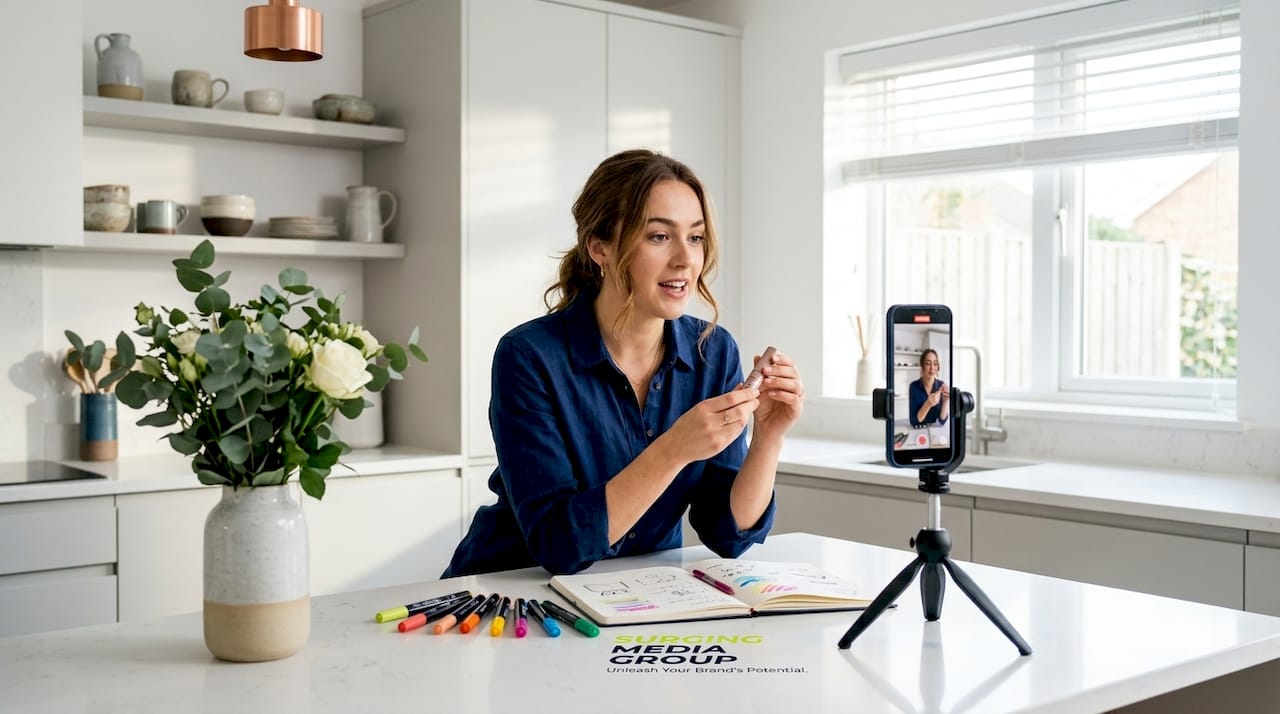
YouTube Shorts require vertical 9:16 videos up to 180 seconds, with 1080×1920 resolution and MP4/H.264 codec recommended for proper Shorts placement. TikTok supports durations up to 10 minutes on standard accounts, though videos under 60 seconds consistently outperform longer ones for discovery. If you are building for reach and new audience acquisition, this is the format to master first.
Pro Tip: Film all short-form content in 9:16 from the start. Cropping landscape footage to vertical always degrades quality and cuts out critical visual information.
2. Live streams
Live streams are the highest-engagement format on Facebook, Instagram, YouTube, and LinkedIn. They create a real-time feedback loop between brand and audience that no pre-recorded format can replicate. The absence of post-production polish is actually an asset here. Viewers stay longer because the content feels unscripted and immediate.
Live streams work best for product launches, Q&A sessions, and event coverage. LinkedIn Live, in particular, has become a credible channel for B2B brands running panel discussions or executive interviews. The key metric to track is not peak viewership but average watch duration, which signals genuine audience investment.
3. Behind-the-scenes videos
Behind-the-scenes content builds brand trust by pulling back the curtain on how products are made, how teams operate, or how a campaign comes together. This format performs well on Instagram Stories, TikTok, and YouTube because it satisfies audience curiosity without requiring a polished production budget. Authenticity is the production value here.
For brands like Copper Compression or Black & Decker, showing the manufacturing process or the people behind the product creates an emotional connection that a product demo alone cannot achieve. Keep these videos short, conversational, and grounded in real moments rather than staged walkthroughs. A brand storytelling approach applied to behind-the-scenes content consistently deepens audience retention.
4. Product demos and tutorials
Product demos and tutorials are conversion-focused by design. They answer the question a buyer has right before they purchase: "Does this actually work for someone like me?" This format performs strongly on YouTube, Amazon, and brand websites, where purchase intent is already high.
High audio quality yields more impact than expensive video production for demos and tutorials. A viewer who cannot hear a clear explanation will abandon the video regardless of how sharp the visuals are. Invest in a quality microphone before upgrading your camera. Keep demos under three minutes for social distribution, and save the extended walkthrough for YouTube or your product page.
5. User-generated content and testimonials
User-generated content (UGC) and customer testimonials are the social proof engine of modern video marketing. They convert skeptical buyers because the message comes from a peer, not a brand. Platforms like TikTok and Instagram amplify UGC naturally because it matches the native aesthetic of the feed.
Testimonial videos work best when they are specific. A customer saying "I lost 12 pounds in six weeks using this product" outperforms "I love this product" every time. Surgingmedia produces authentic testimonial content that captures real customer outcomes and formats them for platform-specific distribution. Video assets like these consistently outperform static creative in paid social campaigns.
6. Interviews and Q&A videos
Interviews and Q&A sessions establish brand authority by associating your name with credible voices and substantive expertise. LinkedIn and YouTube are the natural homes for this format. A 10-minute interview with an industry expert or a founder answering customer questions signals depth and trustworthiness in a way that short-form content cannot.
The format also has strong SEO value on YouTube, where search-driven discovery rewards longer, topic-specific content. Structure interviews with clear chapter markers and embed key quotes as text overlays to improve accessibility and watch time. Keep the host's questions short and give the guest room to develop their answers.
7. Animated and explainer videos
Animated explainer videos are the most underused format in most brand content strategies. They excel at simplifying complex products, processes, or data in a way that live-action cannot. SaaS companies, financial services brands, and healthcare marketers rely on this format because it removes the need for on-camera talent while maintaining high production clarity.
A well-crafted 90-second animated explainer can outperform a two-minute live-action demo when the product concept requires visual abstraction. Motion graphics, whiteboard animation, and 2D character animation each serve different tonal needs. Match the animation style to your brand personality rather than defaulting to whichever template is cheapest.
8. Stories
Stories are the ephemeral format native to Instagram, Facebook, and Snapchat. They disappear after 24 hours, which creates urgency and drives immediate interaction through polls, swipe-ups, and question stickers. The 9:16 vertical format applies here as well, with a recommended resolution of 1080×1920 pixels.
Stories are ideal for time-sensitive promotions, daily brand touchpoints, and audience engagement mechanics. They are not the right format for evergreen content. Use them to drive traffic to longer content, promote limited-time offers, or maintain daily visibility without the production overhead of a polished Reel.
9. Event and announcement videos
Event and announcement videos create awareness spikes around product launches, brand milestones, or industry appearances. These videos work across every major platform but perform especially well on LinkedIn for B2B audiences and YouTube for brand-building. The format benefits from higher production investment because it represents the brand at a moment of significance.
Keep announcement videos under 90 seconds for social distribution. Lead with the news in the first five seconds rather than building to it. Audiences who do not immediately understand what is being announced will scroll past before the reveal.
10. Shoppable and interactive videos
Shoppable and interactive videos represent the fastest-growing category in social commerce. Platforms like TikTok Shop, Instagram Shopping, and YouTube have integrated direct purchase functionality into the video player itself. This collapses the distance between content and conversion to near zero.
Interactive formats, including choose-your-own-path ads and embedded CTAs, are gaining traction on connected TV and streaming platforms as well. Types of video ads in this category are increasingly performance-driven, with click-through and purchase data feeding directly back into campaign optimization.
How video specs affect platform performance
Failing to meet platform specs leads to cropping, compression artifacts, or outright rejection, all of which reduce reach. The table below covers the core technical requirements marketers need to know.
| Platform | Aspect ratio | Resolution | Max file size | Recommended codec |
|---|---|---|---|---|
| TikTok | 9:16 | 1080×1920 px | 287.6 MB | MP4/MOV, H.264/AAC |
| Instagram Reels | 9:16 | 1080×1920 px | Up to 4 GB | MP4, H.264 |
| YouTube Shorts | 9:16 | 1080×1920 px | 256 GB or 12 hours | MP4, H.264 |
| LinkedIn video | 16:9 preferred | 1920×1080 px | 5 GB | MP4, H.264 |
| Instagram Stories | 9:16 | 1080×1920 px | 4 GB | MP4, MOV |
LinkedIn landscape format outperforms vertical on that platform because the professional context and desktop viewing behavior favor widescreen presentation. Uploading the wrong ratio on LinkedIn does not cause rejection, but it does cause awkward cropping that undermines credibility.
Pro Tip: Export all social videos at the highest quality your editing software allows, then let the platform compress on its end. Starting with a compressed source file compounds quality loss.
Choosing the right format for your marketing goal
Selecting among the popular social media video styles available is a strategic decision, not a creative one. Match the format to the outcome you need.
- Reach and discovery: Use short-form vertical video on TikTok, Reels, and Shorts. The algorithm rewards native-feeling content that holds attention past the three-second mark.
- Conversion: Deploy product demos and tutorials on YouTube and your website, where purchase intent is highest. Pair with shoppable formats on TikTok Shop or Instagram Shopping for direct-response results.
- Trust and social proof: Publish UGC and testimonials across paid and organic social. Authentic customer voices reduce purchase hesitation more effectively than brand-produced content.
- Authority and thought leadership: Use long-form interviews and Q&A sessions on LinkedIn and YouTube. These formats signal expertise and attract high-value audiences.
- Immediate engagement: Run Stories and live streams for real-time interaction. These formats reward consistency over production quality.
- Education and clarity: Use animated explainers for complex products or processes. This format removes friction for audiences who need to understand before they buy.
Best practices for repurposing video across platforms
Start with the most restrictive format when building your master file, which is typically the 9:16 vertical at 1080×1920. From that master, you can create 1:1 square crops for Facebook feed and 16:9 landscape versions for YouTube or LinkedIn without significant quality loss. Reversing this process, starting with landscape and cropping to vertical, almost always produces unusable results.
- Upload natively to each platform rather than sharing links. Native uploads receive preferential treatment from recommendation algorithms on every major platform.
- Track video metrics by format type rather than aggregating all video performance together. A testimonial video and a short-form Reel serve different goals and should be evaluated against different benchmarks.
- Adapt captions and text overlays for each platform. Caption styling affects moderation outcomes in regions with strict content policies, and accessible captions improve watch time universally.
- Cross-posting between TikTok and Instagram Reels is efficient because audience expectations on both platforms are closely aligned. LinkedIn requires a separate content approach entirely.
"The most efficient video production workflow starts with one master file and branches outward. Brands that produce separate videos for every platform from scratch are spending three times the budget for the same reach."
For repurposing video content across e-commerce and social channels, a modular production approach, where footage is captured with multiple formats in mind from day one, consistently outperforms post-production cropping and reformatting.
Key takeaways
The most effective video content strategy maps each format directly to a platform specification and a marketing goal, with short-form vertical video leading for reach and product demos leading for conversion.
| Point | Details |
|---|---|
| Format drives algorithm favor | Videos that meet native platform specs receive better distribution and avoid compression penalties. |
| Short-form leads in reach | TikTok, Reels, and Shorts use 9:16 at 1080×1920 and reward fast, native-feeling content. |
| Match format to goal | Use demos for conversion, UGC for trust, interviews for authority, and Stories for daily engagement. |
| Start vertical for repurposing | Master files in 9:16 convert to 1:1 and 16:9 cleanly; the reverse degrades quality. |
| Native uploads outperform links | Every major platform algorithm favors natively uploaded video over externally linked content. |
What I have learned about format strategy after years in production
The conversation about social media video formats almost always starts in the wrong place. Marketers ask "what should we make?" before they ask "where does this need to live and what does it need to do?" I have watched brands spend significant production budgets on beautifully crafted landscape videos that were then uploaded to TikTok and immediately cropped into something unrecognizable.
The formats that consistently get overlooked are animated explainers and long-form interviews. Everyone chases the Reel because the metrics are visible and the format is familiar. But I have seen a single well-produced explainer video carry a product launch for months, generating search traffic and converting cold audiences who needed to understand the product before they trusted it.
The other thing I would push back on is the assumption that production quality is the primary driver of performance. Audio quality matters more than camera quality for demos and tutorials, and authenticity matters more than either for UGC and testimonials. The brands that win on social video are the ones that understand what each format is actually asking of the viewer, and then deliver exactly that. Short-form asks for attention. Testimonials ask for belief. Live streams ask for presence. Give the viewer what the format promises, and the metrics follow.
— Sergio
How Surgingmedia produces video that performs across every format
Surgingmedia specializes in producing video content built for performance across every major social platform. From short-form Reels and TikTok content to product demos, testimonials, and animated explainers, every project is produced with platform specs and direct-response principles woven into the production plan from day one. The team has delivered results for brands like Copper Compression and Black & Decker, producing content that drives measurable sales and lead generation. Whether you need a single format or a full cross-platform content system, Surgingmedia's production team handles concept, scripting, production, and distribution analytics. Reach out to discuss your next video project.
FAQ
What is the best video format for social media reach?
Short-form vertical video in 9:16 aspect ratio at 1080×1920 pixels is the most effective format for reach on TikTok, Instagram Reels, and YouTube Shorts. TikTok videos in this format earn a median engagement rate of 3.39%, making it the top-performing format for discovery.
What aspect ratio should I use for LinkedIn video?
LinkedIn video performs best in 16:9 landscape format because professional audiences typically view content on desktop, and the widescreen ratio matches that context. Vertical video is supported but rarely optimal for professional messaging on the platform.
Should I upload videos natively or share links on social media?
Native uploads consistently outperform shared links because every major platform algorithm favors content uploaded directly to the platform. Sharing an external link removes the video from the platform's recommendation system entirely.
How do I repurpose one video for multiple platforms?
Start with a 9:16 vertical master file at 1080×1920 pixels, then create 1:1 and 16:9 variations from that source. This approach preserves quality across formats and avoids the degradation that comes from cropping landscape footage to vertical after the fact.
Which video format works best for conversions?
Product demos and tutorials are the strongest conversion-focused format, particularly on YouTube and brand websites where purchase intent is already present. Pairing demos with shoppable video formats on TikTok Shop or Instagram Shopping shortens the path from content to purchase.